
That empty park near you could be a forest.
You don't need money, expertise or connections to begin. Just the will to lead and a community ready for it.
We give you the rest.
You don't need money, expertise or connections to begin. Just the will to lead and a community ready for it.
We give you the rest.
From Canberra to the south coast to regional Victoria, local leaders are getting it done.
As seen on ABC NewsBroulee students turned their school playground into a forest of 1,000 native trees.Read the story
A microforest is a dense, native forest planted in a small urban space, sometimes as small as a tennis court. The approach is based on the Miyawaki method: native species planted densely in prepared soil, growing faster and supporting more biodiversity than conventional planting.
Learn moreLocal leaders and schools have planted seven microforests, four in the ACT and three in NSW, with new forests under way in the ACT, NSW and Victoria.
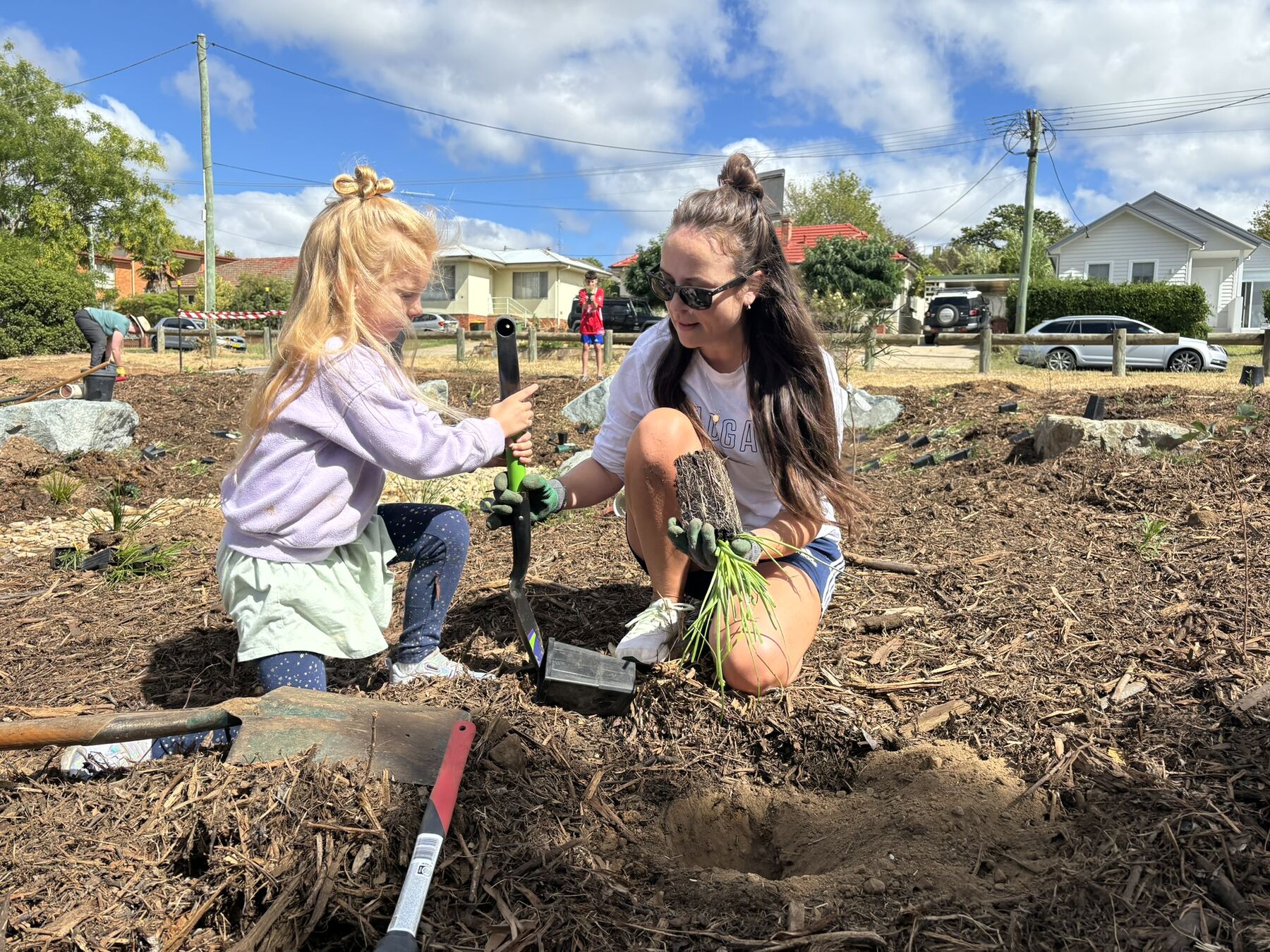
See the forestsMore than 10,000 native trees and shrubs are in the ground across these forests, bringing back habitat, cooling streets and giving neighbours a place to meet.
Our storyEvery microforest is led by someone local who cares about where they live. We provide the pathway, templates and support. They provide the commitment and the people.
How leading worksAustralian Institute of Project Management. Our Queanbeyan Microforest is the case study. Winners are announced in Canberra on 5 November.
2026 NSW Landcare Awards, for the Broulee school microforest at St Peter's Anglican College.
As featured in

Local leaders are ordinary people who care about where they live. Young parents, working professionals, long-time locals. Most had never led anything like this before.
You don't need an abundance of free time or special skills. What matters is that you can bring a few people with you and keep them moving. Leadership here means organising a small crew, not doing everything yourself.
We give you the pathway, templates and support. You bring the people, the commitment and the local connection.
You're not carrying it alone. But you are the one who makes it happen.
See if this is for youGot a park in mind? Check how it suits a microforest.

Our work has been supported by Wedgetail, the conservation fund founded by CEO Lisa Kate Miller and Canva co-founder Cameron Adams.
Their backing is helping us pilot school-based microforests and build a model schools across Australia can use.
See our schools programCommunities plant the forests. Your gift builds what's behind every one.
Wayfinder walks every local leader and school through approvals, design, fundraising and planting, one step at a time.
We design each forest with native species matched to its site, and help teams through council and school approvals.
Your gift helps us say yes to new schools and communities across Australia, with South Australia and Queensland next.
Follow along for free. Each month: new forests going in, schools coming on board, the people growing them, and planting days near you.
Anyone who cares about where they live and can bring a few people along: a parent, a teacher, a neighbour or a local group. Most of our leaders had never led a project like this before. We look for commitment and a team, and we train you in the rest.
You create a forest your community can walk past for decades: shade on hot days, a home for birds and insects, and a place where neighbours meet. Along the way you build skills in planning, fundraising and bringing people together, with our team and other leaders beside you.
Most projects take 12 to 18 months from the first conversation to planting day. Planting happens in spring or autumn, and the forest needs watering and weeding for the first couple of years while it gets established.
Yes. Tell us about it and we'll look for people nearby who could lead it. You can also check a park on our park check to see how it suits a microforest.
Your gift builds what sits behind every forest: the guide, the forest design, help with approvals and fundraising, and support for each leader and school until planting day. Gifts of $2 or more to Microforest Collective are tax deductible. A gift to a particular forest's appeal goes to that forest's fund.
Through donations, grants, partners who back our work, and a fee from the projects we support.